Cyberattacks and Water Supplies: Is Your Home Prepared?
Recent cyberattacks on water utilities and other national networks highlight a growing concern for American homeowners. Learn how these threats can affect household water and why emergency preparedness matters.
Cyberattacks and Water Supplies: A Growing Concern
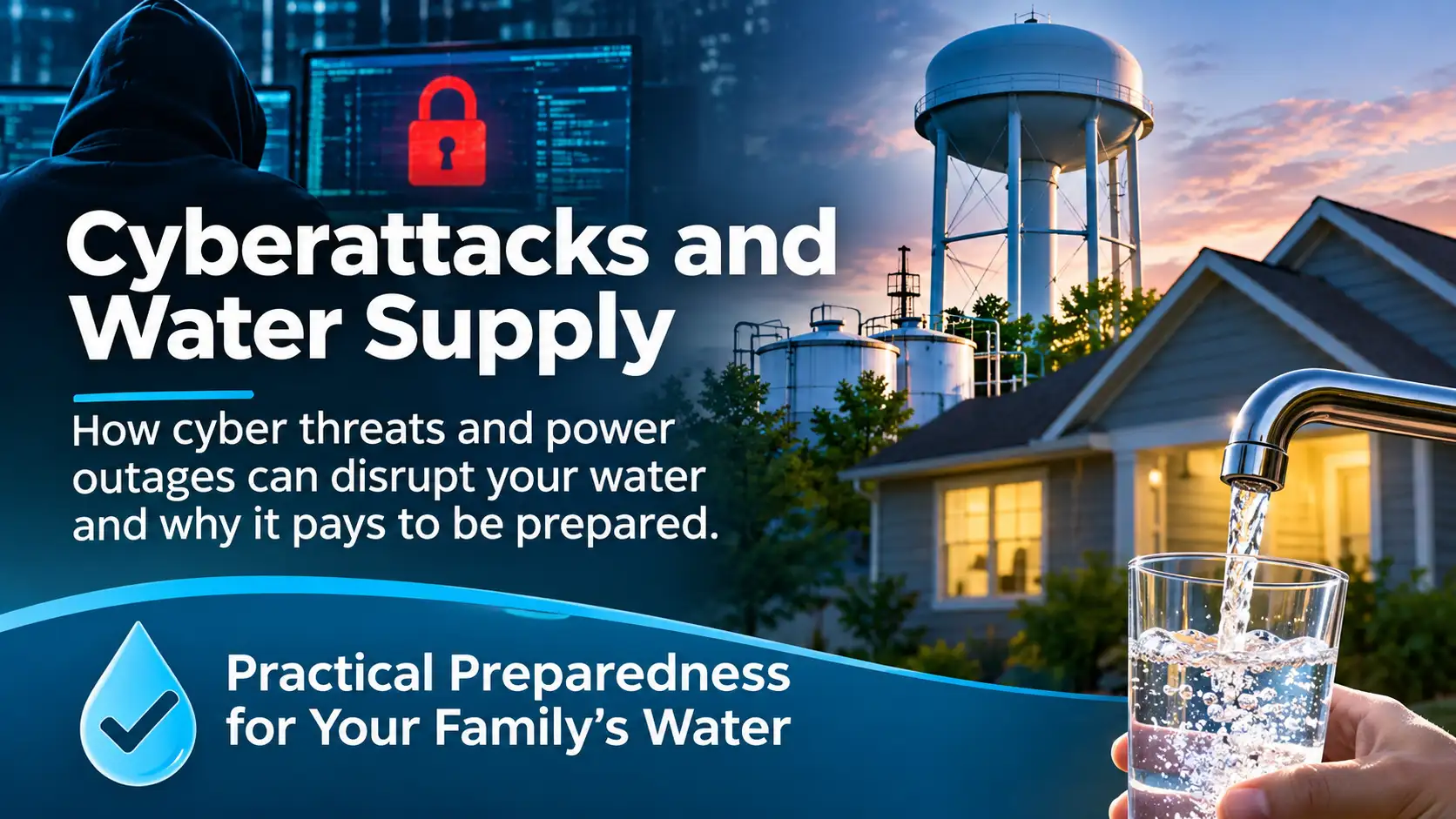
Cyberattacks and water supply disruptions are becoming an important concern for American homeowners. Our water infrastructure depends on electricity, pumps, computers, and connected networks to deliver water reliably.
Most families rarely think about these systems. They simply turn on the faucet and expect water. However, a cyberattack can disrupt water operations even when pipes and pumps remain physically intact. A separate electrical outage can also stop water delivery.
What happens to your family if the water suddenly stops?
Being prepared simply means taking reasonable steps to protect the people who depend on you.
Recent Cyberattacks on U.S. Water Systems
In July 2026, cyberattacks targeted water and wastewater utilities across at least seven states.
According to an August 2026 Congressional Research Service report, these incidents raised serious concerns about the security of America’s water infrastructure. The attacks targeted computerized equipment used to control water operations. Some utilities lost access to equipment or switched to manual operation.
Reported consequences included:
-
Temporary shutdowns of water facilities.
-
Disruptions to water pressure.
-
Precautionary boil-water advisories.
-
Emergency switching to manual operations.
A September 2026 report from The Pew Charitable Trusts also highlighted the risks facing public water infrastructure. Officials did not report widespread water contamination from the July attacks. However, the incidents demonstrated how cyber intrusions can interfere with water operations.
These events reinforce an important lesson: Cyberattacks and water supply interruptions are no longer just hypothetical concerns.
How Can Cyberattacks Affect Your Home’s Water Supply?
Municipal water systems depend on computerized equipment to manage water treatment, storage, and distribution. These systems monitor water levels, operate pumps, and regulate pressure.
A successful cyberattack could disrupt these operations. For example, attackers might disable remote pump controls or interfere with monitoring equipment. Utility operators may need to shut down affected systems while technicians restore safe operations.
Water service could also fail if electricity becomes unavailable.
No electricity can mean no pumping. No pumping can eventually mean no water.
The U.S. Environmental Protection Agency warns that cybersecurity weaknesses can threaten water treatment, storage, and distribution. Although utilities work to protect their infrastructure, homeowners cannot control every potential failure.
For families, the result may be the same regardless of the cause: The toilets and faucets stop working.
Public Water vs. Private Wells: Different Risks, Same Need for Water
Cyberattacks and water supply failures can affect homes differently depending on their water source.
Homes Connected to Public Water
Municipal water systems rely on treatment plants, pumps, storage tanks, and distribution networks. A cyberattack could interfere with these systems directly. It might reduce pressure, interrupt pumping, or force the utility to suspend operations.
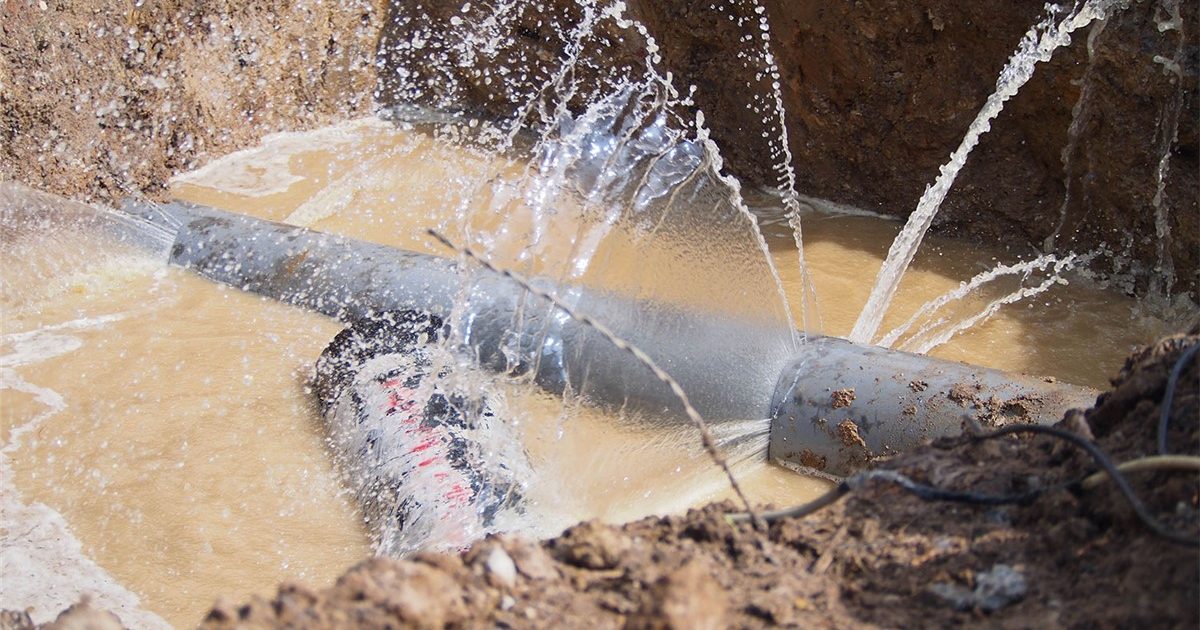
Even when electricity remains available at your house, the utility may be unable to deliver water. A broken water main or major electrical failure can create similar problems.
Homes Using Private Wells
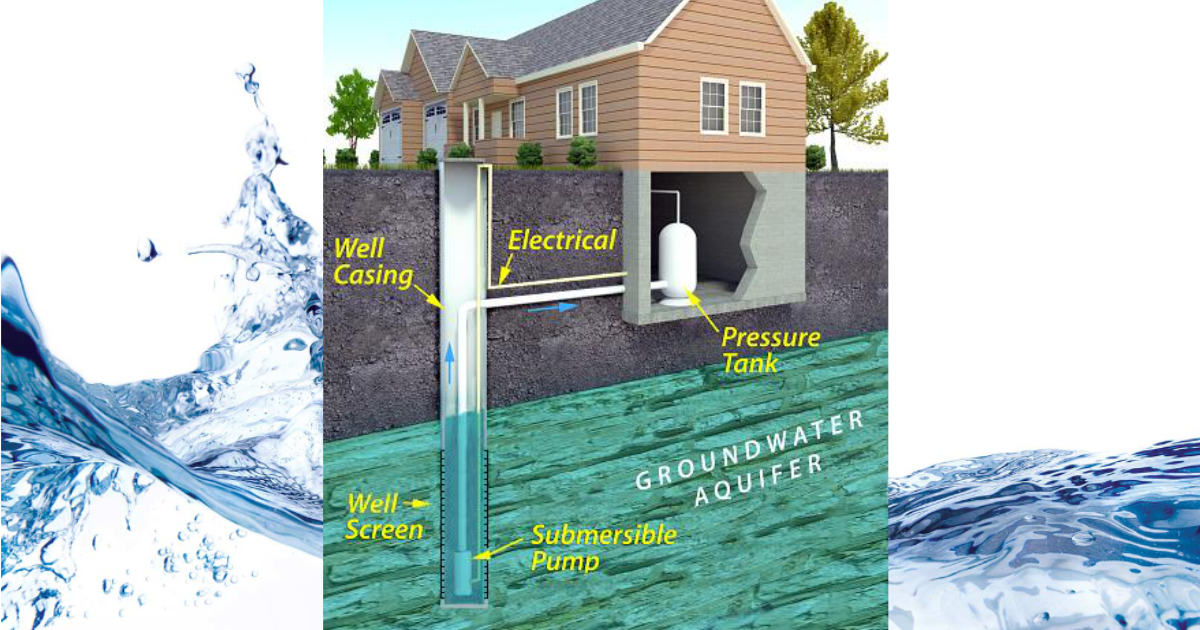
Most residential wells use an electric pump to bring groundwater into the home. A conventional well pump usually has no internet connection. Therefore, it generally does not face the same direct cyber risks as municipal control systems.
However, well pumps depend on electricity. If an outage interrupts the pump, the home’s water supply may stop once the pressure tank’s usable reserve is exhausted. Well owners can also lose water because of pump malfunctions or electrical problems.
Public water users depend on utility infrastructure. Private well users depend on their pump and electricity. Both benefit from emergency water storage.
Learn how Constant Water protects single-family homes from unexpected outages.
Can Water Towers Protect Your Home During a Water Outage?
Many cities use elevated water towers to store treated water and maintain pressure. When pumping stops, gravity can continue delivering water for a limited time. However, the available supply is not unlimited.

Water towers can maintain water pressure during temporary pumping interruptions, but their emergency capacity and duration vary by community.
How long a tower can support the system depends on several factors:
-
The amount of usable stored water.
-
The number of customers served.
-
The rate of water consumption.
-
Minimum pressure requirements.
-
Whether other facilities continue supplying water.
For example, New Orleans operates two large water towers at its Carrollton Water Treatment Plant. Each tower can hold approximately two million gallons. Yet the city’s Sewerage & Water Board reports that these towers can maintain pressure for up to 40 minutes during certain power outages.
Read about New Orleans’ water tower protection system.
Other cities may have longer reserves. Storage capacity and emergency operating procedures vary considerably. Water towers provide important protection for communities. However, they cannot guarantee uninterrupted household water service during an extended emergency.
Cyberattacks and Water Supply: Why Electricity Matters
Water and electricity are closely connected. Electric power supports treatment plants, pumping stations, monitoring systems, and private wells. Cyberattacks against electric infrastructure represent another potential threat to water availability.
A Congressional Research Service report on electricity reliability identifies cyberattacks among the risks facing electric utilities. However, cyber intrusions should not automatically be described as confirmed cyber-caused blackouts. The August 2026 report did not identify a successful cyberattack that caused a U.S. electric-power outage.
Nevertheless, the connection between electricity and household water remains important.
Backup generators can help utilities maintain operations. However, generators depend on working equipment, maintenance, and fuel. For private well owners, an electrical outage can interrupt pumping immediately.
This connection makes cyberattacks and water supply preparedness a concern for both municipal customers and well owners.
Emergency Water Preparedness: Everyone Should Prepare
When an outage occurs, families often rush to buy bottled water. Others fill bathtubs and sinks before an approaching storm. But what if the outage arrives without warning?
Cyberattacks, broken water mains, and unexpected electrical failures may provide little opportunity to prepare. Water is essential for more than drinking. Families also need water for cooking, washing, personal hygiene, and flushing toilets.
For elderly residents and people with disabilities, carrying heavy buckets of water can be especially difficult.
The Centers for Disease Control and Prevention recommends storing at least one gallon per person per day for three days.
For a family of four, that means at least 12 gallons. However, this minimum does not support normal household water consumption. Additional storage makes basic hygiene and sanitation easier. It can also help families remain comfortably at home during longer disruptions.
Preparedness is not about expecting a catastrophe. It is about reducing the disruption when something goes wrong.
Constant Water: Emergency Water Already in Your Home
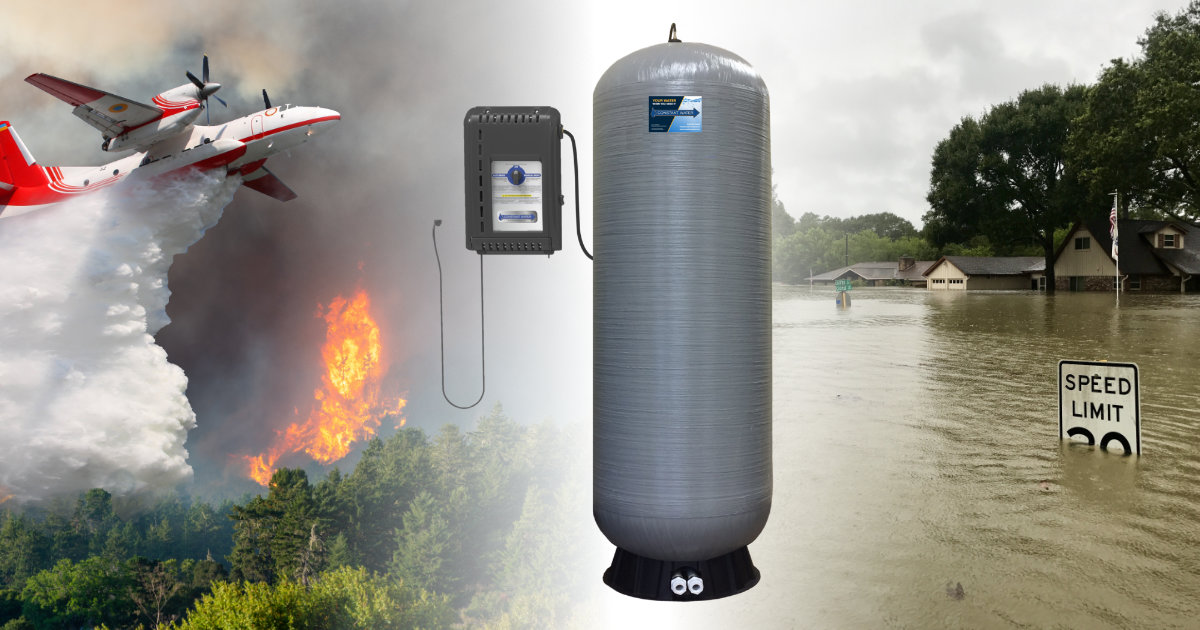
Constant Water provides homeowners with a practical approach to emergency water preparedness. Our battery-powered, whole-house emergency water systems store fresh water within the home’s plumbing system. The flow-through design replenishes stored water during normal household use.
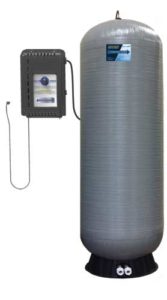
When electrical power fails, Constant Water can automatically activate and deliver pressurized water from its storage tanks. If the water supply stops while household electricity remains available, homeowners can activate the system manually. This provides protection against both electrical outages and interruptions caused by well pump failures or public water system problems.. Stored water can then flow through the home’s existing plumbing to sinks, showers, and toilets.
Constant Water offers several important benefits:
-
Water already available: Emergency storage is in place before an outage.
-
Battery-powered operation: Potable emergency water available without a generator.
-
Whole-house distribution: Provides drinkable water throughout your home via existing household plumbing.
-
Flow-through storage: Normal daily water use keeps stored water fresh and ready for any outage.
-
Expandable capacity: Available 80- and 120-gallon systems can be expanded for additional emergency water capacity.
The length of emergency service depends on stored capacity and household consumption. Constant Water does not generate additional water after its reserve is exhausted. It also does not purify contaminated water. But a properly installed system provides a valuable advantage during unexpected water interruptions.
Explore how Constant Water works or review our emergency water system options.
Protect Your Family Before the Next Water Outage
Cyberattacks and water supply disruptions demonstrate why reliable household water deserves greater attention.
Utilities work to protect their systems, but no infrastructure can guarantee uninterrupted service. Homeowners can take additional steps to protect their household water supply.
With adequate emergency water storage, families can reduce their dependence on bottled water, avoid carrying heavy buckets, and maintain essential household activities.
These everyday activities are critical to health, sanitation, and independence. Reliable emergency water also provides peace of mind, particularly for families with elderly members, people with disabilities, or those who need water for home healthcare.
Water is Life!
Constant Water — Your Water When You Need It.
Explore Constant Water emergency water systems and prepare your home before the next unexpected outage.